
The COVID-19 pandemic changed our lives overnight. On the bright side, it acted as a catalyst for digital transformation. Everyone was “Working from Home”, yet the sharks in the ocean didn’t hesitate to “nibble” on our delicate undersea cables. Being in lockdown is frustrating enough, add a spinning browser loading icon, and it’s a recipe for a headache 🙃.
Rumor has it that using a VPN can boost your speed and ease that frustration. But what is the truth behind this? Let’s find out!
1. What exactly is a VPN?
VPN stands for Virtual Private Network. As the name suggests, it is an internet security service that allows users to access the web through a private “tunnel”. A VPN encrypts your connection and helps you browse anonymously. Some in the tech community even jokingly refer to it as “Internet condom”.

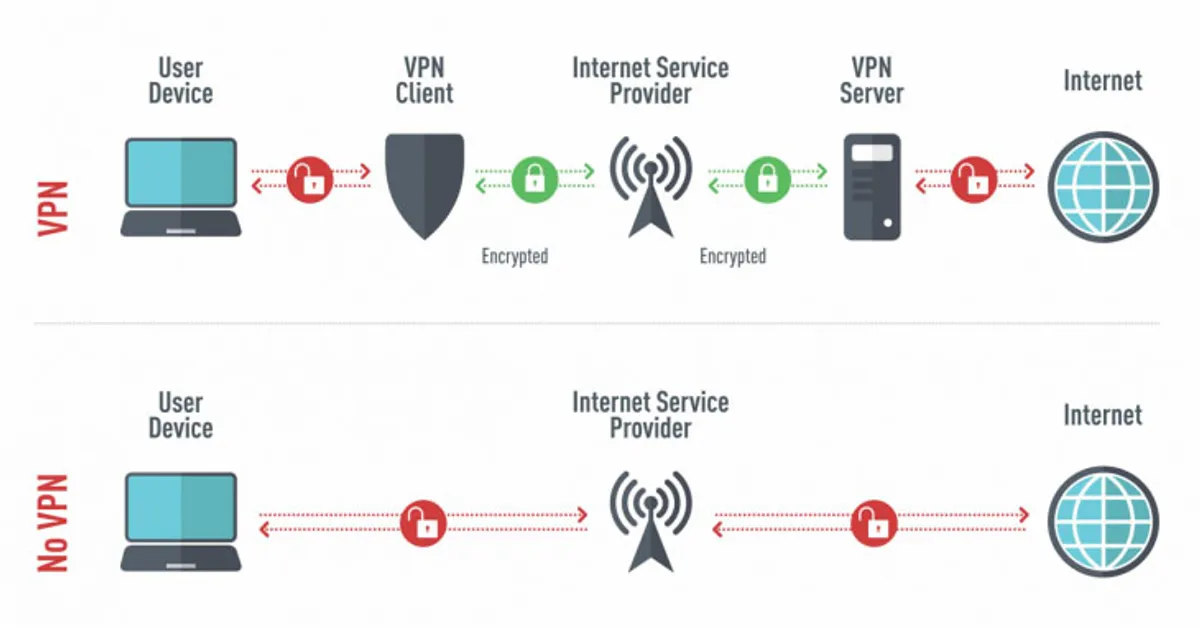
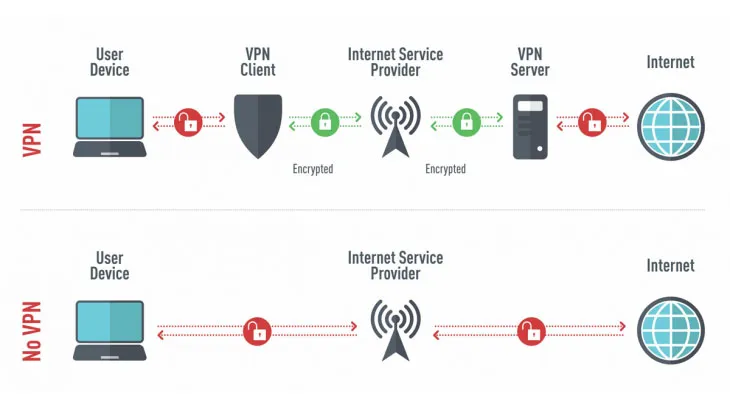
At its core, a VPN relies on a remote server. When you want to access Facebook via a VPN, your connection is encrypted through a VPN Tunnel and sent to the VPN server. Because the data is encrypted, your ISP (Internet Service Provider) and potential hackers cannot see which specific site you are visiting, they only see that you are connected to a VPN server.
Once your request reaches the VPN server, it is decrypted and forwarded to the nearest Facebook server. In this scenario, Facebook cannot see your actual location or IP address, it only sees the IP of the VPN server.
Note: While VPNs are great for privacy, you should choose a reputable, paid service. With free VPNs, your data is often the product being sold.
2. Can a VPN actually increase your speed?
Technically, using a VPN adds an extra step to your connection. This usually decreases your speed. Latency depends on several factors: VPN server bandwidth, routing algorithms, and encryption overhead. Imagine trying to connect to a server in Vietnam: instead of a direct local route, your traffic travels to a VPN server in Hong Kong first, then back to Vietnam. It’s essentially taking the “scenic route”.
So, why does it feel faster during a cable break?
ISPs in Vietnam rely on international cables like AAG, APG, and IA. When a cable breaks, total bandwidth drops. To keep the network stable, ISPs often implement bandwidth throttling on high-traffic services like Facebook or YouTube, especially during peak hours.
This is where a VPN shines. Because your traffic is encrypted, the ISP’s filters can’t identify that you are watching YouTube. It just sees generic traffic to a VPN server and doesn’t apply the specific throttle. Thus, your connection feels faster.
However, if the ISP’s total capacity is completely exhausted, even the VPN server will be hard to reach. We’ve all been there: staring at a loading screen, hoping a VPN will save us, only for the VPN app itself to keep spinning 😢.
3. Practical tips for staying connected
I personally use a plan with moderate bandwidth, so I often balance privacy and speed. Based on my experience:
- Use VPNs Strategically: During cable breaks, only turn on the VPN during peak hours to bypass throttling.
- Invest in Quality: If you have high bandwidth, a high-quality VPN (with good routing) will have a negligible impact on speed while keeping you secure.
- Mobile Data (4G/5G): Interestingly, 4G/5G often stays faster than home Wi-Fi during cable incidents. This is because mobile data is more expensive per GB, so ISPs tend to prioritize bandwidth for these connections.
I hope this clarifies the “magic” of VPNs during cable break seasons. If you found this helpful, feel free to share it with your friends! Thanks for reading 😍.